England confirms new mpox strain: What you need to know
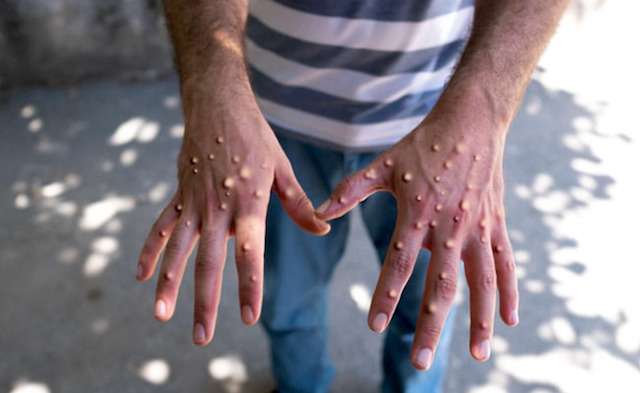
The illness spreads through close contact with an infected person, including sexual contact, and can also be passed on through coughing or sneezing. It typically begins with flu-like symptoms such as chills, body aches, and fatigue, followed by a rash that may develop into blisters.
A new strain of mpox has been identified in England, according to public health authorities. The case was detected in an individual who had recently travelled to Asia.
Officials described the discovery as a “new recombinant mpox virus,” meaning it contains genetic material from more than one viral strain. Sequencing showed that the genome includes elements from both clade Ib and clade IIb mpox.
More To Read
- Kenya urges stronger regional cooperation as transport corridors fuel disease risks across East Africa
- How Trump–Ruto health deal fills the void left after USAID exit
- Kenya, US sign Sh208 billion health cooperation deal to transform to strengthen primary care, services
- Young people must lead HIV fight, says PS Ouma Oluga
- Kenya steps up border checks as Ethiopia confirms outbreak of Marburg Virus Disease
- Governors sound alarm as 934 newborns die amid funding row in health sector
The illness spreads through close contact with an infected person, including sexual contact, and can also be passed on through coughing or sneezing. It typically begins with flu-like symptoms such as chills, body aches, and fatigue, followed by a rash that may develop into blisters.
Because this new strain is a recombinant, essentially a hybrid of two existing forms of the virus, scientists do not yet know whether it will act differently, such as spreading more easily or causing more severe illness.
Only a single case has been identified so far, leaving it uncertain whether the strain will begin circulating more widely or remain rare. Authorities have said they are continuing to evaluate its significance, and firm conclusions about the level of risk will depend on further data.
Health authorities said that viral evolution is expected and that further analysis will clarify how the virus is changing. They emphasised that although many mpox infections are mild, the illness can be severe, and vaccination remains an effective way to reduce the risk.
The mpox vaccine is offered through the National Health Service (NHS) to people considered at higher risk, including men who have sex with men and have multiple partners.
Officials noted that they will continue to assess the significance of this new strain.
Experts in the field have warned that the emergence of a recombinant strain is a possibility when the virus spreads widely without strong global control measures.
They noted that the key concern now is whether such developments could affect how easily the virus spreads or how severe infections become.
Mpox typically causes a skin rash with blisters, spots, or ulcers that can appear anywhere on the body. Other symptoms include fever, headache, and muscle or back pain, with the rash usually appearing one to five days after initial symptoms.
The virus spreads through direct contact with lesions or scabs, including during sexual activity or other close skin-to-skin contact. Transmission can also occur through bodily fluids such as saliva or nasal secretions, contaminated items like bedding or clothing, and prolonged close face-to-face contact involving talking, coughing, or sneezing.
Kenya has been dealing with an ongoing mpox outbreak since July 2024, with hundreds of confirmed cases recorded across the country. By mid-2025, the number of cases had reached approximately 370, and the virus had spread to about 21 of Kenya’s 47 counties.
The strain circulating in the country is clade Ib. Much of the transmission has been concentrated along a major transport corridor stretching from the coastal port city to the western border, where long-distance travellers such as truck drivers and traders are more frequently exposed. Most reported infections have been among young adults, particularly those between 20 and 40 years old.
The Ministry of Health has intensified its response through strengthened surveillance, contact tracing, and public health messaging. Vaccination efforts are also underway after Kenya received doses designated for high-risk groups, including truck drivers, people identified as contacts of confirmed cases, and frontline health workers.
Some counties, such as Nakuru, have launched local vaccination campaigns to support these national efforts.
Despite these measures, community transmission continues, and the virus has expanded into counties beyond the original transport corridor. A portion of the spread has been linked to sexual contact among mobile populations, raising concerns that the outbreak may continue unless preventive measures are maintained.
Individuals with weakened immune systems, including some living with HIV, have faced a higher risk of severe outcomes, which has been reflected in several of the deaths reported.
Top Stories Today